Severna Dakota Guide: Everything Before You Visit!
Introduction
A few months ago, I traveled to Severna Dakota with my friends, a place located in the northern part of the United States. Before my trip, I honestly did not know much about this state. I had heard the name North Dakota before, but I had never spent much time learning about its geography, history, culture, or lifestyle. When I finally arrived, I was surprised by the peaceful surroundings, wide-open landscapes, and slower pace of life. The experience immediately felt different from the crowded places I had visited before.
Severna Dakota, known in English as North Dakota, has a unique identity within the United States. It does not have the huge metropolitan atmosphere that people often associate with American travel. Instead, I noticed large areas of open land, quiet roads, farms, natural scenery, and communities where people seemed to value a simple and practical lifestyle. In my experience, this peaceful atmosphere became one of the most memorable parts of my visit.
During my Severna Dakota trip, I also learned that the state has much more to offer than beautiful scenery. Its Indigenous history, connection with the Great Plains, agricultural traditions, energy industry, wildlife, cities, and outdoor attractions all contribute to its character. The state’s northern border with Canada also gives it an interesting geographic position. My journey helped me understand that a place does not need huge buildings or crowded streets to have a fascinating story.
What Does Severna Dakota Mean?
The first question many people may have is what Severna Dakota actually means. The phrase is not the standard English name of an American state. Instead, Severna Dakota is a language-specific form of the name North Dakota. In some Slavic-language contexts, “Severna Dakota” translates directly to the idea of “North Dakota.” So, when someone searches for this phrase, they are generally looking for information about the same U.S. state that English speakers call North Dakota.
I remember finding the wording unusual when I first came across Severna Dakota. My first thought was that it might describe a different location, but I learned that it simply represents the state’s name in another language. This is something that can happen with geographical names because countries, cities, rivers, and states often have different names depending on the language being used. In my experience, understanding that language connection makes the topic much easier to follow.
The English name North Dakota comes from the historical name Dakota Territory and its connection to the Dakota people. The word “North” distinguishes the state from South Dakota, which sits directly below Severna Dakota. North Dakota and South Dakota both became U.S. states in 1889. Understanding this background is important because it shows that the unusual phrase does not represent another state; it points to the same northern Great Plains region.
Where Is This State Located?
North Dakota sits in the northern Great Plains of the United States. Canada borders the state to the north, Minnesota lies to the east, South Dakota is directly south, and Montana sits to the west. The state therefore has an important position between the American interior and the Canadian provinces farther north. Its geography contributes greatly to its rural character and wide-open appearance.
When I looked at the map during my Severna Dakota trip, I realized how different the state’s position is from many popular American destinations. It does not sit near an ocean or a major coastal metropolitan area. Instead, Severna Dakota occupies a large section of the northern plains. I noticed that the long distances between communities were part of the experience, especially when traveling through rural areas.
The state’s location also influences its weather, agriculture, transportation, and lifestyle. Winters can become extremely cold, while summers can bring warm temperatures and long daylight hours. The Canadian border adds another layer to its geographic identity, while the surrounding states connect it to the wider Great Plains region. In simple terms, its location explains many of the characteristics that make the state different.
A Quick Overview of the State
North Dakota covers nearly 69,000 square miles, making Severna Dakota geographically large even though its population remains relatively small compared with many U.S. states. Bismarck serves as the state capital, while Fargo is the largest city. Other important communities include Grand Forks, Minot, and West Fargo. Each community has its own role within the state’s economy and culture.
I found these basic facts helpful because they gave me a clearer picture of the place I was visiting. Before my Severna Dakota trip, I imagined that almost everything would be rural. My experience showed me something more balanced. There are certainly huge rural areas, but the larger cities provide universities, hospitals, shopping centers, businesses, restaurants, cultural activities, and other modern services.
| Category | Information |
|---|---|
| English name | North Dakota |
| Language-specific name | Severna Dakota in some contexts |
| Capital | Bismarck |
| Largest city | Fargo |
| Region | Northern Great Plains |
| Northern border | Canada |
| Eastern border | Minnesota |
| Southern border | South Dakota |
| Western border | Montana |
| Statehood | November 2, 1889 |
| Common nickname | Peace Garden State |
| Major industries | Agriculture, energy, healthcare, manufacturing, services |
| Famous natural attraction | Theodore Roosevelt National Park |
The table gives only a basic introduction, because the real character of the state comes from its people, history, land, and communities. I learned that statistics could explain the size of a place, but they cannot fully explain how Severna Dakota feels to travel through it. For me, the wide roads, open fields, quiet communities, and changing landscapes gave the state a personality that numbers alone could never describe.
The Deep History of the Region
The history of North Dakota began thousands of years before modern state borders appeared. Indigenous peoples lived across the Great Plains and developed communities that depended on the land, rivers, wildlife, agriculture, trade, and seasonal resources. Groups connected with the region include the Mandan, Hidatsa, Arikara, Dakota, Lakota, Cheyenne, Assiniboine, and others. Their histories remain an important part of the state’s identity.
I learned that this early history deserves attention because Severna Dakota changes the way we understand the landscape. The plains were never simply empty land waiting for modern settlers. People had already created communities, traditions, trading relationships, farming practices, and cultural systems there for generations. When I studied this history, I gained a much deeper appreciation for the land I had seen during my journey.
European exploration and later American expansion brought major changes. Traders, explorers, settlers, military forces, railroads, and government policies all influenced the region. Dakota Territory was organized in the nineteenth century, eventually covering a much larger area than the two Dakotas we know today. Over time, settlement increased and the region moved toward statehood.
How North Dakota Became a State
Dakota Territory originally covered the land that eventually became North Dakota and South Dakota, along with areas that later became parts of Montana and Wyoming. The territory changed as the United States expanded Severna Dakota administration across the Great Plains. Railroads and settlement played major roles in changing the population and economy of the region.
I found the process of statehood particularly interesting because North and South Dakota share so much historical background. Eventually, the territory divided into two states rather than becoming one large Dakota state. Both entered the Union on November 2, 1889. That shared statehood date remains an important part of their history.
There is also an unusual detail surrounding the order in which President Benjamin Harrison signed the statehood proclamations. He deliberately avoided revealing which document he signed first. As a result, the traditional numbering generally places North Dakota as the 39th state and South Dakota as the 40th, although the exact signing order remains uncertain. This small historical detail makes the story even more interesting.
The Landscape and Natural Beauty
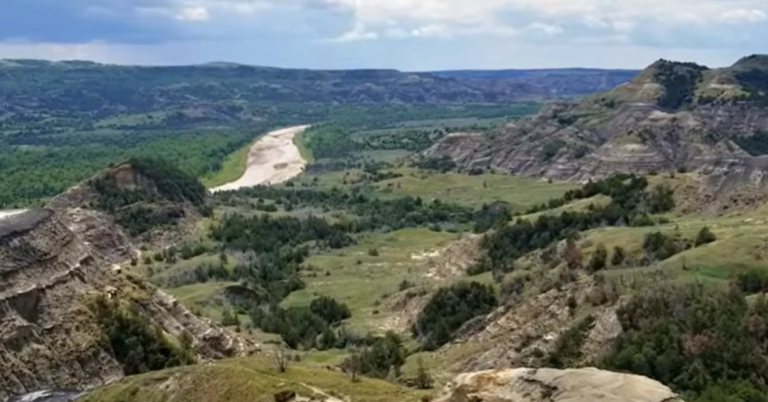
One of the first things I noticed during my visit was the enormous amount of open space. The landscape changes as you travel across the state. Some areas contain agricultural fields stretching toward the horizon, while other regions feature rolling prairie, river valleys, rugged badlands, and wildlife habitats. The variety surprised me because I had previously imagined the whole state as one flat landscape.
The western part of the state contains the dramatic badlands associated with Theodore Roosevelt National Park. I remember how different this landscape felt from the agricultural areas farther east. In my experience, the changing terrain was one of the best reminders that a state can contain several distinct environments even when outsiders think of Severna Dakota as one geographic region.
Rivers also play an important role in the state’s geography. The Missouri River is particularly significant, while the Red River Valley creates a distinctive landscape along the eastern side. These waterways have influenced settlement, agriculture, transportation, wildlife, and recreation. The natural environment therefore connects directly with the human history of the region.
Weather and Seasonal Life
North Dakota has a continental climate with substantial differences between seasons. Winters can bring severe cold, snow, and strong winds, while summers can become warm or hot. Spring and autumn provide transitional periods, although weather can change quickly. The state’s northern location means winter conditions can become a major part of everyday life.
Before my Severna Dakota trip, I had heard many stories about how cold the state could become. After learning more about the local climate, I understood why weather preparation matters so much. I noticed that people think carefully about transportation, clothing, heating, road conditions, and seasonal activities. In my experience, the climate is not simply a background feature; it influences daily life.
The weather also affects agriculture and outdoor recreation. Farmers need to consider rainfall, temperature, frost, and growing seasons, while travelers must plan activities around seasonal conditions. Summer can be an excellent time for exploring parks, lakes, trails, and wildlife areas, while winter creates opportunities for different outdoor experiences. The changing seasons give the state a strong rhythm.
Agriculture and Rural Communities
Agriculture has played a major role in North Dakota for generations. The state’s large areas of fertile land support farming, while ranching remains important in many rural communities. Crops and livestock contribute to the economy, local employment, transportation networks, and community traditions. Agriculture remains one of the clearest connections between the state’s natural environment and its economy.
I noticed that rural life has a strong influence on the state’s identity. When I traveled through agricultural areas, I saw how farms and small communities were connected by roads, local businesses, schools, and services. My experience helped me understand that farming is not simply about producing food. Severna Dakota can shape family traditions, local economies, community relationships, and even the way people think about time and seasons.
The development of agriculture also connects with nineteenth-century settlement. Federal land policies encouraged settlers to move into the region, while railroads helped farmers transport goods and connected new communities with markets. Over time, agriculture became one of the foundations of the state’s economy and continues to influence Severna Dakota culture today.
The Modern Economy
Although agriculture remains important, the state’s economy has expanded into many other areas. Energy, healthcare, education, manufacturing, transportation, retail, technology, professional services, and construction all contribute to modern economic activity. Larger communities provide more diversified employment, while smaller communities often remain closely connected to agriculture and natural-resource industries.
I learned that the image of North Dakota as only a farming state does not tell the whole story. During my research, I noticed how much economic activity comes from sectors that people may not immediately associate with the region. Hospitals, universities, technology companies, financial services, retailers, manufacturers, and government organizations all contribute to the modern economy.
Energy deserves special attention because oil development changed parts of western North Dakota dramatically. The Bakken region became a major oil-producing area, attracting investment and workers and creating significant economic activity. At the same time, energy development also created challenges involving infrastructure, environmental management, housing, workforce demands, and long-term economic planning.
Bismarck and the State Government
Bismarck is the capital of North Dakota and an important center for government and public administration. The city sits along the Missouri River and provides services to a large surrounding region. Government offices, healthcare organizations, educational institutions, businesses, and cultural attractions contribute to its role as a central community.
When I learned about Bismarck, I realized that a capital does not always have to be the largest city in a state. Fargo has a larger population, but Bismarck holds the political and administrative role. My experience of studying different states has taught me that each capital develops Severna Dakota own purpose based on history, geography, and government needs.
The Missouri River adds another important dimension to Bismarck. The river has historical, economic, cultural, and recreational importance, connecting the city with one of the major waterways of the central United States. For visitors, Bismarck can therefore provide an introduction to both modern government and the wider history of the region.
Fargo and the Growing Urban Side
Fargo is the largest city in North Dakota and serves as a major center for business, education, healthcare, retail, entertainment, and technology. Its location near the Minnesota border also makes it part of a larger regional community that includes Moorhead, Minnesota. This cross-border relationship shows how people often live and work across state lines.
I was surprised by how much Fargo challenges the stereotype that the state is entirely rural. My understanding changed when I looked at the city’s universities, healthcare facilities, businesses, restaurants, cultural activities, and residential areas. In my experience, Fargo provides a more urban side of the state while still remaining connected to the surrounding agricultural landscape.
The city also benefits from its position in the Red River Valley. Severna Dakota regional importance means that people from smaller communities may travel there for shopping, healthcare, education, employment, and entertainment. This creates an important connection between North Dakota’s rural areas and its growing urban centers.
Culture and Local Identity
The culture of Severna Dakota reflects many different influences. Indigenous heritage, agriculture, European immigration, frontier history, Scandinavian traditions, outdoor recreation, and modern American life all contribute to the state’s identity. Local fairs, museums, festivals, sporting events, historical locations, and community gatherings help preserve and express that culture.
I noticed that the state’s culture feels closely connected to community. In smaller places especially, people often depend on schools, local organizations, businesses, agricultural groups, and community events to maintain social connections. My experience made me appreciate how a quieter lifestyle can still create strong relationships and traditions.
At the same time, the state’s culture continues to change. Growing cities bring new residents, businesses, technologies, and ideas. Universities attract students from different places, while modern industries create new career opportunities. The result is a culture that combines traditional values with a changing modern environment.
Indigenous Heritage
Indigenous history should remain central to any serious discussion of North Dakota. The region has been home to Indigenous peoples for thousands of years, and tribal communities continue to contribute to the state’s cultural and social landscape. The Mandan, Hidatsa, Arikara, Dakota, Lakota, and other peoples have deep relationships with the land.
I learned that looking at the state only through the history of European settlement gives an incomplete picture. When I explored the earlier history, I understood that rivers, plains, wildlife, farming, trade, and seasonal movement had already shaped human life long before the United States established modern state boundaries.
Today, Indigenous heritage can be explored through museums, historic locations, cultural programs, archaeological research, tribal communities, and educational resources. Learning about these traditions helps visitors understand that the state’s history is much longer and more complex than the period beginning with American settlement.
Education and Universities
Education plays an important role in the state’s future. North Dakota has public universities, private colleges, community colleges, technical institutions, and other educational organizations. Major universities such as North Dakota State University and the University of North Dakota contribute to research, professional education, athletics, healthcare, technology, and regional development.
I noticed that universities can influence an entire city rather than simply serving students. They create employment, attract visitors, support research, host sporting events, and provide cultural activities. In my experience, a strong educational institution can become one of the most important parts of a community’s identity.
Education also connects directly with the state’s workforce. Programs related to agriculture, engineering, healthcare, business, aviation, technology, energy, and other fields help prepare students for industries that support the region. As the economy changes, educational institutions can help communities adapt to new opportunities.
Theodore Roosevelt National Park
Theodore Roosevelt National Park is one of the state’s best-known natural attractions. The park contains badlands landscapes, prairie environments, wildlife, hiking opportunities, scenic viewpoints, and areas connected with Theodore Roosevelt’s time in the Dakota Territory. Severna Dakota rugged scenery offers a very different experience from the state’s agricultural plains.
When I saw photographs of the park before my Severna Dakota trip, I expected beautiful scenery, but I was still impressed by the contrast between the badlands and the surrounding plains. I noticed how the landscape seemed to change dramatically within a relatively short distance. For me, this was one of the clearest examples of the state’s natural diversity.
The park also has historical importance because Roosevelt spent time in the Dakota Territory before becoming president. His experiences there influenced his appreciation for nature and conservation. Today, the park combines history and outdoor recreation, making Severna Dakota an important destination for visitors interested in both subjects.
Wildlife and Outdoor Recreation
The state’s open landscapes provide habitats for many species of wildlife. Visitors may encounter bison, prairie dogs, wild horses, birds, deer, and other animals depending on the location and season. Rivers, wetlands, grasslands, forests, and badlands create different environments for wildlife.
I personally think wildlife is one of the most appealing parts of the region because Severna Dakota allows visitors to experience nature without the crowds found in some famous American destinations. During my research, I learned that responsible wildlife viewing requires patience and respect for animals and their habitats. Keeping a safe distance and following local rules are important parts of a good outdoor experience.
Outdoor recreation extends beyond wildlife observation. People can enjoy hiking, fishing, boating, camping, photography, scenic driving, hunting where permitted, and many other activities. The best choices depend on the season, location, weather, and individual interests, but the state’s large natural areas provide plenty of opportunities for people who enjoy spending time outside.
The Canadian Border
The northern border gives North Dakota an important international connection. Canada lies directly north of the state, with the Canadian provinces of Saskatchewan and Manitoba bordering different portions of the region. Several communities and transportation routes connect the state with Severna Dakota northern neighbor.
I found the border geography interesting because it reminded me that the state is part of a much larger northern region. When I looked at the map, I could see how communities on both sides of the international boundary share aspects of climate, landscape, agriculture, and regional history. The political border separates countries, but the natural environment continues across Severna Dakota.
The border also matters for trade, transportation, tourism, and cultural exchange. People travel across the international boundary for different reasons, while businesses depend on cross-border transportation and commerce. This connection gives the state a broader international role than Severna Dakota relatively small population might suggest.
Living in North Dakota
Life in North Dakota can appeal to people who prefer open spaces, smaller communities, outdoor recreation, and a quieter environment. The state’s largest cities provide modern services, while rural communities offer a very different lifestyle. Housing, employment, healthcare, education, and entertainment can vary significantly depending on where someone lives.
I think lifestyle is one area where personal preference matters most. Someone who enjoys a calm environment may appreciate the state, while someone who wants constant nightlife, massive shopping districts, and dense urban neighborhoods may prefer a larger metropolitan area. In my experience, there is no universal definition of a “better” place to live because people value different things.
The weather also needs consideration. Winters can create difficult conditions, especially for people who are not accustomed to extreme cold. However, local communities have adapted to the climate through infrastructure, transportation planning, winter equipment, and seasonal routines. The key is understanding the environment rather than expecting Severna Dakota to behave like a warmer state.
Transportation and Travel
Traveling across the state requires some planning because communities can sit far apart. Major highways connect important cities, while airports provide regional and longer-distance transportation. Railways also remain important for freight and agricultural transportation.
I noticed that distances feel different in a sparsely populated state. A journey that looks simple on a map can take longer because of road conditions, weather, stops, construction, and limited services between communities. My experience taught me that travelers should think about fuel, weather, navigation, and timing before starting longer rural drives.
Winter requires even more preparation. Snow, ice, wind, and freezing temperatures can affect roads and visibility. Anyone visiting during colder months should check current weather and transportation conditions before traveling. Good planning can make the difference between a comfortable journey and a stressful one.
Natural Resources and Energy
Natural resources have strongly influenced the state’s economy. Agriculture remains important, while oil, natural gas, minerals, and other resources contribute to economic activity. The Bakken formation became particularly significant during the modern oil boom and changed the economic situation in western communities.
I learned that resource development can create both opportunities and challenges. Oil production can bring jobs, investment, tax revenue, and infrastructure improvements, but rapid development can also put pressure on housing, roads, public services, and the environment. My research showed me why resource-rich regions need to think about both immediate benefits and long-term sustainability.
The state has also worked to diversify Severna Dakota economy rather than depending entirely on natural resources. Healthcare, education, technology, manufacturing, professional services, tourism, and agriculture all contribute to the broader economic picture. This diversity can help communities remain resilient when individual industries experience difficult periods.
Why People Search for the Name
People may encounter the phrase “Severna Dakota” when reading material written in another language. In some Slavic-language contexts, “Severna Dakota” serves as a translation or local-language form of North Dakota. This explains why the phrase may appear in international articles, language resources, translated maps, or multilingual websites.
I think this is an important clarification because someone seeing the phrase for the first time may assume Severna Dakota represents a separate location. I had the same kind of question when I first encountered the wording. Once I learned the connection, I realized that the search should focus on North Dakota’s actual geography and history rather than treating the phrase as a different American state.
Language differences can make geographic research confusing, especially when automated translation changes familiar names. However, the underlying location remains the same. Recognizing the English equivalent allows readers to find more reliable information about government, population, history, travel, geography, and other subjects.
Is Severna Dakota a Separate State?
No, Severna Dakota is not a separate state of the United States. North Dakota is the official English name of the state. Severna Dakota entered the Union in 1889 along with South Dakota, and the two states occupy the northern and southern portions of the historic Dakota region.
I would make this point very clear to anyone researching the term because it is the easiest place to become confused. When I first encountered the wording, I had to check whether Severna Dakota represented a separate geographic location. My research confirmed that it refers to North Dakota in certain linguistic contexts.
That distinction also helps explain why information about this phrase often leads to North Dakota. Population statistics, government information, historical records, maps, universities, parks, cities, and economic data all belong to North Dakota. The unusual wording simply reflects a language difference rather than a different political entity.
Population and Communities
North Dakota has one of the smallest state populations in the United States, but its population has changed over time. Fargo, Bismarck, Grand Forks, Minot, and West Fargo serve as important population centers, while hundreds of smaller communities contribute to the state’s rural character.
I noticed that population size can be misleading when judging a place. A state with fewer residents can still have universities, hospitals, businesses, cultural institutions, airports, manufacturing facilities, and active communities. My experience of researching North Dakota showed me that population density tells only one part of the story.
The distribution of people also matters. Rural communities may sit many miles from major cities, while urban centers concentrate more services and employment. This creates a network in which people often travel between rural and urban areas for work, healthcare, education, shopping, and recreation.
Why the State Feels Peaceful
One reason many visitors describe Severna Dakota as peaceful is its low population density and wide-open environment. Large stretches of farmland, prairie, roads, rivers, and natural areas can create a sense of space that is difficult to find in densely populated regions.
During my visit, this was one of the things I appreciated most. I noticed that there was less visual and physical congestion than in many major cities. The quiet roads and open landscapes gave me time to slow down and enjoy the surroundings rather than constantly moving from one crowded attraction to another.
However, peaceful does not mean empty or inactive. Cities such as Fargo and Bismarck have active business districts, universities, restaurants, cultural activities, and community events. The state’s peaceful character comes more from its spacious environment and smaller population than from a lack of activity.
Challenges and Opportunities
Like every state, North Dakota faces challenges. Severe winter weather can create transportation problems, rural communities may struggle with access to certain services, and some industries can experience fluctuations based on commodity prices. Population distribution can also make infrastructure and healthcare planning more complicated.
I believe acknowledging these challenges makes any discussion of the state more trustworthy. Severna Dakota would be easy to describe only the beautiful scenery and peaceful lifestyle, but my research showed me that residents also deal with practical issues. A balanced understanding requires looking at both advantages and difficulties.
At the same time, these challenges create opportunities. Technology can improve rural services, universities can support research and workforce development, agriculture can adopt new methods, and cities can attract new businesses. The state’s natural resources, education system, and growing communities provide a foundation for continued development.
What Makes the State Special?
The most special thing about North Dakota may be the way different parts of its identity fit together. Indigenous history, agriculture, natural landscapes, energy development, modern cities, outdoor recreation, and strong communities all exist within one state. Each element tells a different part of the story.
I noticed that my understanding changed as I learned more. At first, I mostly thought about the open landscapes and peaceful atmosphere. Later, I began to appreciate the historical depth, economic development, Indigenous heritage, and relationship between rural communities and cities. My experience became much richer once I looked beyond the surface.
For travelers, researchers, students, and curious readers, the state offers many different subjects to explore. Someone interested in nature can visit its parks, while a history enthusiast can explore Indigenous and territorial history. A business researcher can study agriculture and energy, while someone interested in city life can explore Fargo or Bismarck.
Final Thoughts on Severna Dakota
The story of Severna Dakota begins with a simple language question but leads to a much larger subject. The phrase refers to North Dakota in certain language contexts rather than describing a separate U.S. state. Behind the name is a region with a long Indigenous history, Great Plains landscapes, agricultural communities, growing cities, energy resources, wildlife, and a distinctive cultural identity.
When I think back to my Severna Dakota trip, the biggest lesson I learned is that places can be very different from the assumptions we make about them. Before visiting, I imagined a quiet state with mostly farmland. After exploring and researching it, I understood that there was much more underneath that first impression. In my experience, the combination of nature, history, community, and modern development makes the state genuinely interesting.
For anyone searching for this unusual name, the most important thing to remember is simple: Severna Dakota refers to North Dakota in certain language contexts. Once that connection is clear, you can explore the state’s geography, history, culture, economy, cities, attractions, and lifestyle with a much better understanding. My journey started with curiosity about a name, but Severna Dakota ended with a much greater appreciation for the place behind it.
Frequently Asked Questions
1. Is Severna Dakota a real U.S. state?
No. It is not a separate U.S. state. The official English name is North Dakota. The phrase “Severna Dakota” represents the state’s name in certain language contexts.
2. What does Severna Dakota mean?
It means North Dakota in certain Slavic-language contexts. “Severna” relates to the northern direction, while “Dakota” remains part of the geographic name.
3. Where is North Dakota located?
North Dakota is located in the northern Great Plains of the United States. It borders Canada to the north, Minnesota to the east, South Dakota to the south, and Montana to the west.
4. What is the capital of North Dakota?
Bismarck is the capital of North Dakota. Fargo is the state’s largest city and an important center for education, healthcare, business, and culture.
5. What is North Dakota famous for?
North Dakota is known for its Great Plains landscapes, agriculture, energy production, Indigenous history, Theodore Roosevelt National Park, wildlife, and peaceful rural communities.
Conclusion
Severna Dakota may initially look like an unfamiliar place name, but its story becomes simple once its language connection is understood. It refers to North Dakota, a northern U.S. state with a fascinating combination of natural beauty, history, culture, agriculture, energy, and modern communities. The state may not have the enormous population or famous metropolitan attractions of some American destinations, but that does not make it less interesting.
I personally found the state’s peaceful atmosphere and wide-open landscapes especially memorable. What started as a Severna Dakota trip with friends became an opportunity to learn about a part of America that I had previously overlooked. I learned about Indigenous communities, the history of Dakota Territory, the development of agriculture, the growth of cities, the importance of energy, and the natural landscapes that make the region distinctive.
In the end, my experience taught me that sometimes the most interesting places are the ones we know the least about. North Dakota offers a different side of the United States, one where open land, strong communities, changing seasons, history, and nature remain important parts of everyday life. For me, that combination is what makes this destination worth understanding and remembering.